Few everyday discomforts are as distracting as a tight neck and shoulders at the end of a long workday. Cordless neck massagers have become a popular way to tackle that tension without being tethered to a wall outlet, but the sheer variety of shapes, technologies, and price points can make choosing one feel like yet another research project. A massage tool can’t replace professional care, and neck pain can signal something more serious, so it’s worth taking a clear-eyed look at what’s available before you click “buy.”
The current market splits into a few distinct approaches: shiatsu kneading nodes that mimic a hands-on massage, TENS or EMS units that send electrical impulses to muscles, cervical traction devices that stretch and support the neck, and heat-based designs that warm tight tissue. Each works differently, and understanding the differences helps you pick a category that fits your routine—not just the one with the most enthusiastic reviews.
What to Know About Cordless Neck and Shoulder Massager Types
The Healthline review of neck massagers groups devices into a handful of core types: shiatsu kneading massagers, TENS/EMS electrical stimulation units, neck traction and stretching devices, and heat-focused options. Shiatsu models use rotating nodes to press and knead, often with a heat function. TENS and EMS units deliver low-voltage electrical currents through adhesive pads or built-in electrodes, aiming to interrupt pain signals or contract muscles. Neck traction devices, sometimes called cervical stretchers, rely on mechanical force to gently pull and reposition the head, which some users find eases pressure. Heat therapy can be built into any of these, from simple warming pads to graphene-based heating elements.
Massage may be used for short-term relaxation or relief of minor muscle discomfort, but it isn’t a fix for underlying injuries, chronic conditions, or nerve-related pain. Healthline notes that neck pain can have serious causes requiring professional evaluation. When you shop cordless and rechargeable, you’re choosing portability over a constant wall connection—not a type that’s inherently better. A cordless shiatsu pillow might fit a commuter, while a rechargeable traction device could sit by a home desk. Knowing the category first keeps the feature list grounded.
What to Look For in a Cordless Massager
Cordless massagers come in a wide price range. Manual handheld tools can cost less than $25, while rechargeable or electrical devices can reach $200 or more—but Healthline points out that a higher price doesn’t guarantee better quality or power. When you go cordless, the battery dictates your session freedom. Rechargeable formats eliminate the cord, but they also introduce charging limits: some, like the AMZPONY Cordless Neck Massager, can’t be used while plugged in. If you prefer uninterrupted long sessions, that’s a trade-off to weigh.
Heat features vary significantly. The BETOVIN Heated Neck Stretcher uses graphene heating with three temperature levels and an ergonomic design, while the Anzzat Neck Stretcher includes adjustable heat paired with a wireless remote. Traction devices like Anzzat’s offer 3-way mechanical traction—a physical stretch, not electrical. TENS units such as the JICHAMOXY Mini Massager pack 6 modes and 10 intensity levels, supporting full-body use. Look for at least three intensity options, as recommended by the article. Breathable fabrics help prevent overheating during longer sessions, and auto-shutoff timers add a layer of safety, though they can interrupt longer relaxation periods.
Controls matter more than they seem on paper. A four-button control system, found on some corded devices like the RESTECK, can make adjustments easier than a single-button cycle. For cordless shiatsu pillows, the Homedics option is a simple on/off design—no intensity tweaking. If you’re comparing TENS devices, check whether the modes are pre-set or customizable. A device that’s light and quiet may suit a desk user; one with a wireless remote can be easier to adjust mid-session without fumbling.
Cordless Neck and Shoulder Massagers to Consider
Five cordless and rechargeable options span traction, TENS, shiatsu, and straightforward neck-and-shoulder form factors. Each entry below is drawn from source-reported details; none reflect hands-on testing. After the individual picks, a comparison table provides a quick side-by-side view.
Anzzat Neck Stretcher: 3-Way Traction with Adjustable Heat
A cervical traction device with wireless remote control sets the Anzzat Neck Stretcher apart from kneading or electrical alternatives. It provides 3-way mechanical traction and adjustable heat, combining a stretch with warmth rather than relying on vibrations or pulses. The wireless remote lets you adjust settings without reaching behind your neck—a small convenience that can matter when you’re trying to relax.
Compared to the JICHAMOXY Mini Massager, which offers basic TENS functionality at an entry-level price, the Anzzat focuses on physical repositioning. Some source comparisons note that mechanical traction effects may take slightly longer to perceive than electrical methods, but relief often lasts longer. It’s a traction-and-heat option, not a TENS or shiatsu device, and it doesn’t claim to resolve compression or nerve irritation—only to apply a mechanical approach that some users find helpful.
JICHAMOXY Mini Massager: Entry-Level TENS with 10 Intensity Levels
Small enough to slip into a bag and designed for full-body use, the JICHAMOXY Mini Massager delivers 6 modes and 10 intensity levels through TENS electrical stimulation. It’s described as basic TENS functionality at an entry-level price, not a clinical-grade device. The unit can be placed on multiple muscle groups, not just the neck and shoulders, which adds versatility for someone who also wants to address leg or back tension.
While it lacks the mechanical stretch of a traction device or the kneading feel of shiatsu, TENS units aim to interrupt pain signals or generate muscle contractions. The source comparisons position it as a budget-friendly way to explore electrical stimulation without committing to a more expensive, feature-heavy unit. There’s no heat, and the 10 intensity levels give a wide enough range to find a tolerable setting, though beginners should start low.
Homedics Cordless Shiatsu Pillow: Portable Kneading Design
The Homedics Cordless Shiatsu All-Body Massage Pillow earned a nod from Good Housekeeping as the best portable option for the price. It uses rotating shiatsu nodes to knead muscles and is completely battery-operated, making it easy to toss in a car or carry to the office. There’s no heat, traction, or intensity adjustment—just a simple cordless pillow that does one thing.
That simplicity is its strength. Where traction and TENS devices come with modes, remotes, or charging limitations, the Homedics pillow requires little thought. It can be positioned behind the neck, lower back, or legs, though some users might find the fixed node placement tricky to align perfectly. If you want shiatsu action without being plugged into a wall, this is one of the few pure cordless options available.
AMZPONY Cordless Neck Massager: Strong Output and a Charging Limit
A source describes the AMZPONY Cordless Neck Massager as surprisingly powerful for a cordless device. That kind of output can benefit anyone frustrated by weak vibrations, but it comes with a notable limitation: it cannot be used while charging. If the battery dies mid-session, you’ll be waiting for it to recharge before continuing.
No added heat, node count, or battery specs are included in the source information beyond that single observation. The design is a neck-and-shoulder wrap, so it rests directly on the target area. It’s a reminder that cordless power can sometimes rival corded models, but only for as long as the battery holds out. For anyone who values strong kneading and doesn’t mind planning around charge time, it’s worth considering.
Jarixo Cordless Neck and Shoulder Massager: Merchant Option for Comparison
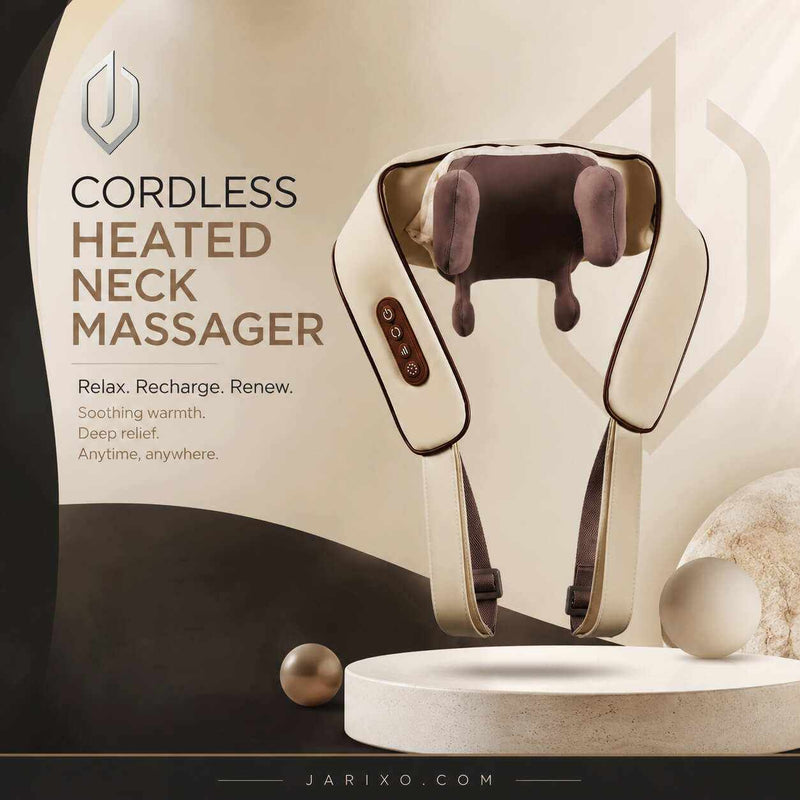
The Jarixo Cordless Neck and Shoulder Massager for Pain Relief offers a cordless neck-and-shoulder form factor for side-by-side comparison with the devices above. Its product name indicates a focus on the neck and shoulder area, but no further specifications—heat, intensity levels, traction, or TENS modes—are detailed here. Check the product page for the most current feature list and user reviews before making a decision.
Having a merchant option in the mix lets you weigh an unknown against source-reported picks. Maybe the Jarixo fills a gap the others don’t, or maybe its omissions are dealbreakers. Without source details, it sits as an alternative to investigate, not a recommendation over the others.
| Product | Primary Use | Source-Reported Strength | Caveat |
|---|---|---|---|
| Anzzat Neck Stretcher | Traction with heat | 3-way traction plus adjustable heat via wireless remote | Mechanical effects may take time to perceive; not a TENS or shiatsu device |
| JICHAMOXY Mini Massager | TENS electrical stimulation | 6 modes, 10 intensity levels, full-body use, entry-level price | Basic TENS functionality; no heat or mechanical traction |
| Homedics Cordless Shiatsu Pillow | Shiatsu kneading | Best portable option for the price | No heat or intensity controls |
| AMZPONY Cordless Neck Massager | Neck-and-shoulder kneading | Surprisingly powerful for a cordless device | Cannot be used while charging |
| Jarixo Cordless Neck and Shoulder Massager | Neck and shoulder form factor | — | — |
How to Match a Pick to Your Routine and Safety Needs
The right category for you often depends on how your discomfort shows up day to day. Traction devices like the Anzzat may appeal if you feel compression or a need for a gentle stretch, while TENS units such as the JICHAMOXY might suit those who respond to that buzzy, pulsing sensation. Shiatsu pillows deliver a more traditional massage feel, but without heat or intensity adjustment in simple cordless models. Source comparisons suggest that mechanical traction effects can last longer once felt, while electrical methods are often perceived faster—picking one is a matter of personal preference, not a universal prescription.
Use the device with a timer in mind. Auto-shutoff features are there for safety, so don’t override them or ignore a unit growing uncomfortably warm. Breathable fabric covers matter during longer sessions; they help prevent heat buildup that can force you to stop early. If a specific product has a “no use while charging” limitation like the AMZPONY, respect it—pushing past that limit can damage the battery or create a hazard. And if you notice increased pain, numbness, or tingling, stop.
Neck pain isn’t always just muscle tightness. Healthline advises that chronic or abrupt neck and shoulder pain should always be checked by a healthcare professional. Pain that radiates down an arm, follows an injury, or comes with headaches can signal something that massage can’t solve. For those cases, a massager isn’t a substitute for a real diagnosis. Use it as a comfort tool, not a treatment plan, and loop in a professional when symptoms persist or worsen.
Frequently Asked Questions About Cordless Neck Massagers
What do studies say about massage for neck pain relief?
A 2017 study cited by Healthline explored massage, including self-massage, for neck pain. The research found some association with short-term improvements in pain and function, but it doesn’t prove massage works for everyone or addresses underlying causes. Self-massage with a device may offer similar potential, but the evidence is limited to small-scale findings.
How is a TENS massager different from a traction neck stretcher?
TENS units use electrical impulses to stimulate nerves or muscles, while traction stretchers mechanically pull the cervical spine apart to create space. Source comparisons note that electrical effects are often felt quickly, whereas traction relief may take a bit longer to notice but can last longer. Neither is objectively better; the choice depends on which sensation and mechanism you find more tolerable and helpful.
When should you avoid using a neck massager?
Stop if you feel sharp pain, numbness, or a burning sensation. Healthline and Good Housekeeping suggest consulting a healthcare professional for persistent or worsening neck pain, pain after an injury, or symptoms that spread to the arms or hands. Overuse or running a device too intensely can also cause soreness, so follow the timer guidelines and don’t push through discomfort.